
Dev TFT: SPACE GODS Reviewed
As we prepare to head into the forest of Enchanted Wilds, let’s take a look back at Space Gods: what we liked, what we learned from, and what we’re looking towards in the future. We’re mostly looking at the fundamental design of the set vs. a specific patch, sorry if you’re looking to understand Milio’s secret training regimen in our final live patch of the set. Space Gods is staying on for a bit after Enchanted Wild releases, so we’ll keep adjusting things to make sure the set stays healthy for those who want to keep playing.
Today you’ll be hearing from:
Alex “BlueVelvet” Cole: Head of Gameplay. His dog knows how to talk, but won’t tell anyone.
Tim “Truexy” Jiang: Tim is the lead on our Live Balance Team. No one knows how to pronounce his tag.
Noemi “Bluecove” Coute: Design Lead for Space Gods and the better “Blue”.
THE REALM OF THE GODS
The Realm of the Gods was one of our most ambitious mechanics since Magic n’ Mayhem’s Charms. Largely, it didn’t pay off how we would have liked for several reasons.
We had explored two distinct variations of the Space Gods mechanic since its inception: One that made it to what you are playing now, and an even more ambitious and chaotic version that was axed during development due to our timeline. Sometimes that’s just the realities of development, but both versions, no matter how they were implemented, were always designed to be impactful by fundamentally changing a system in TFT.
Our first pitch for the mechanic had a huge scope, allowing the Realm of the Gods to completely change everything from Augment distribution to core item distribution (it originally replaced items you’d get from PvE as well), and beyond. This was dramatic and appealing, but it had many issues when it came to live balance and some design problems that would need huge timelines to tackle. Space Gods came together on a more accelerated timeline than most sets by a notable margin. At one point, it was envisioned as our 18th set, but we needed to make some swaps to ensure we had enough time to complete our migration to Unreal by Set 18. As a result, Space Gods became our 17th set. We definitely faced some pains for this set due to that accelerated timeline, but we made that choice to support TFT’s long-term future, and we’ve still come away with a lot of great learnings from Space Gods that we’ve already applied to other in-development sets. One clear learning—we’ve gotten much better at making sets than 7 years ago, but each one still needs plenty of time to cook - we’re taking that to heart for every set moving forward.
Now, back to Space Gods. Without the full time to cook, we ended up with a safer, less volatile mechanic: the current Space Gods system of Offerings and Boons. It ended up being a little too safe, and it didn’t create that game-to-game variance and excitement we were looking for.
One thing we learned from Set 14, Cyber City, is that a set mechanic like Hacks had the potential to overly-inflate a set with downstream effects like a high frequency in three-star 4-costs, and a meta that leans more towards fast-nine than anything else. We knew this, so we kept all the God Offerings down to a power level of no more than 8 gold. But even with that, the set suffered from inflation in early patches—something we corrected by tuning down all our sources of inflation. But with a power level of no more than 8 gold, it was tough to create many interesting God Offerings that could be balanced alongside others. On top of that, we attached God Offerings to item components with the intention that this would create more of a decision-making moment for players. On paper this sounds great; item components give players a reason to question a God Offering they’d typically want—and while there is skill expression in decision making like this, it ends up being burdensome for players.
Obviously there were some things we liked about the Space Gods mechanic, such as the playful expression art of our God roster—it’s always cool to see your favorite champion in a new light. But even here we ran into issues, with the Gods creating a substantial burden on the memory budget for mobile devices. Our team made some smart reallocations of budget, lowering the quality of things like idle animations to allow for our Space Gods to shine, but at the end of the day we were making the best of an Engine that was never made for mobile. As we look to sharpen our craft and skills post-engine migration, we should be able to budget memory more efficiently in the future.
CAROUSEL
Much of our conversation around Carousel is an extension of the previous topic, but there’s one thing to call out here before we dive into the downstream effects of removing Carousel. Namely: removing the Carousel was never the inspiration for our mechanic, but instead the result of our search for the best place to put the Realm of the Gods. In early iterations the Realm of the Gods also replaced a few of our PvE rounds, but let’s get back to how Carousel’s absence impacted our game.
We learned two main things from the removal of Carousel:
- Comeback mechanics lose their effectiveness if they're invisible. Even when we added an alert to the UI telling the player that they would receive additional / different loot for their placements, it was still far less noticeable than the very visual, but also active comeback mechanic of Carousel. As a comeback mechanic, the Carousel also allowed for you to choose from almost every item component with all the options that are rotating around, giving more control than the item anvil / armory style options we could provide with Pengu’s offerings.
- The Carousel is an important social space that’s enhanced by its tension. It’s the place where everyone gets together, can see each other, share in some good ol’ fashioned emoting, and bad ol’ fashioned item sniping. It’s our place. The Realm of the Gods had everyone in the same screen, but the lack of tension (focusing on what items/units you may want on the Carousel and what your back-ups are) resulted in players not interacting with each other in any way. So, while we may not be excited to get our item component taken, we are excited to spam emotes together again.
Another few callouts here: These are learnings that we wouldn’t have been able to explore without the removal of Carousel in the first place, and learnings that we have the opportunity to apply or think about as we approach our Unreal migration for Enchanted Wilds.
First, we know that Carousel is pretty dang important for TFT, now more than ever, so we’ve got some changes coming to Carousel in the more distant future that will maximize agency and control for our space that’s not in space.
Second, with our engine migration, we’ve deprecated the minimap. While the minimap is a relic of being on Hextech, it’s not super useful for gameplay, but it is used as a social tool in TFT PC (it currently does not exist on Mobile). Losing it will hurt PC social interactions, because the minimap’s primary use was to let you know where pings are being spammed so you can track down the high roller or start holding units of someone looking to three-star a 4 or 5-cost (you wouldn’t dare though, right?). With the minimap gone, we still want to preserve this type of social communication, so we’re taking Pings into the workshop to rework them into a social tool that’s not bound to the minimap for its utility to function. This will take some time and won’t be ready on release for Enchanted Wilds, but we’ll ping you when we’ve got clearer vision on their release timing.
THREATS, 5-COSTS, A LIMITED ROSTER, AND FLEX PLAY
It’s no secret, set 16, Lore & Legends was hugely successful, in no small part due to its expanded roster and trait structure. We knew going from 100 units back to our standard roster size would have some downstream effects on player reception heading into set 17. We did what any team might do after such an outsized success: we tried to capture the benefits of set 16's expanded roster, but we quickly determined that we didn’t want to rush out a bunch of half-baked champs to hit roster size parity, without hitting roster quality parity. So let's dig into the challenges we faced in their attempt to retain the fun of set 16's roster size, but without 100 champions to play with.
Flexibility:
Set 16 was incredibly flexible, which was a priority for the set’s design, so when we looked at 17 we knew it had to be just as flexible, and we made adjustments to the trait webs to do just that. We flattened most traits, making it a very horizontal set, as opposed to one where big verticals could rule. Even our vertical Origin traits were shaped to be more supportive flex traits at early breakpoints with things like Dark Star (2)'s execution or Stargazer (3)’s enhanced hexes impacting more than just units of their trait. Unfortunately, this meant that new players trying to learn the game or just play some casual big vertical gameplay were having a lot of trouble. We certainly have made improvements here as the set has progressed, bringing more verticals into viability like Space Groove and Meeple (7). Past that, even skilled players who prefer more minor variations of verticals were missing a key aspect of TFT gameplay.
5-costs and Capstone Traits:
Set 16 was all about the 5-costs, and the Unlockable Champions system allowed us to have 5-costs for both our vertical Origins (Galio, Tahm Kench, Mel) that felt great and easier to hit while also having plenty of flexible 5-costs to splash in when needed or high-rolled (Fiddlesticks, Kindred). So, like in previous sets, we could have 5-costs lift our verticals into their highest fantasies - but we were also able to design traits whose highest non-Prismatic breakpoints were reachable without them. For Space Gods, hitting 5-costs like Jhin for Dark Star (6), or Blitzcrank for Space Groove (7) is really difficult; it doesn’t feel great to have all the ingredients for your cool vertical but not be able to hit that last 5-cost even though you managed your econ near-perfectly and didn’t even have to roll until level 8/9. Because set 17’s roster size compelled a return to trait structures like this, we also saw an outsized emphasis on Emblems, especially for Dark Star, which didn’t have a solid frontline without the Emblem.
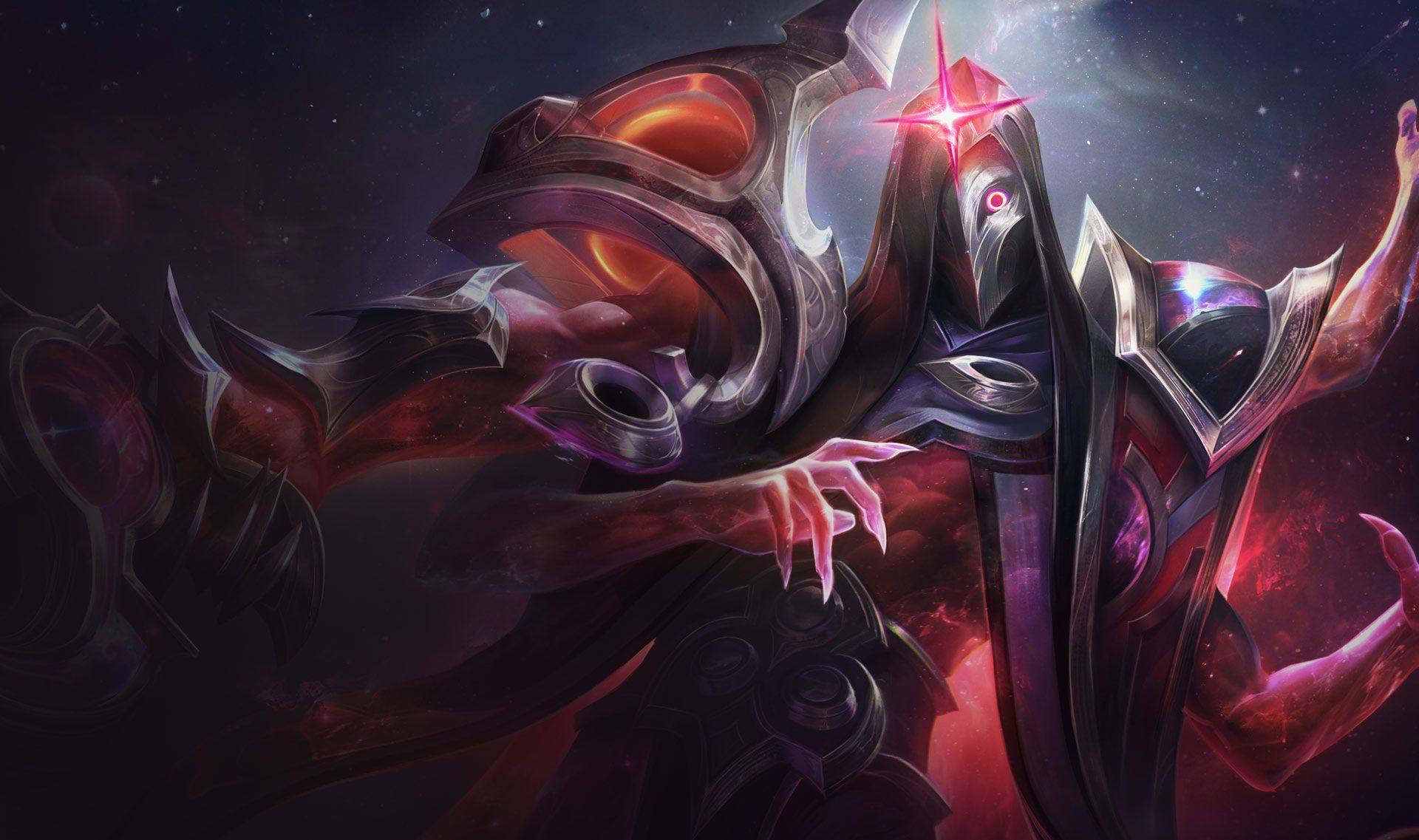
On the flip side of this, we have a trait like Meeple, where you can achieve Meeple (7) without ever needing to hit Bard. When you do find him, you can throw one of your little Meeples out to space and slot him in. Set 16 was able to do a lot of Meeple-shaped traits with its expanded roster, and set 18 will not have an expanded roster—so what are we doing to solve this in the immediate future? For one, we’ve limited the number of Origins that need a 5-cost to hit their maximum non-Prismatic breakpoint.
We also want to continue to find ways to expand the roster. An expanded roster also buys us the space to add more flexible and adaptable units as Threats. Threats are great additions to a set, but as replacements to core pieces of a set, they can come with critical drawbacks with many of the verticals lacking in a capstone fantasy. We had a lot of Threats in Space Gods, and with a significant percentage of the roster budgeted into these units, many of our high-spectacle Origins fell short. Even still, we’ve come away with the right understandings of why and how to apply the right logic to future sets.
OPENING ENCOUNTERS
As we mentioned earlier, our early iteration of the Realm of the Gods was a heck of a lot more impactful on game variance, for better and for worse. That version didn’t need Opening Encounters, so later on when we adjusted the mechanic closer to what you see now, we never added them back. We did this for two main reasons:
- We assumed that Opening Encounters would add too much complexity to the mechanic. The assumption was that at the start of the game, having to check the UI for both the God options and Opening Encounters would be too much for the set. This assumption ended up being incorrect, as the small amount of complexity added was not sustained over the course of the game.
- We wanted to budget the inflationary power of Opening Encounters into the set mechanic itself. By removing Opening Encounters, we could add those resources into the set mechanic, which was supposed to provide game--to-game variance as well. We quickly learned that the variance from the Realm of the Gods was not enough, and that Opening Encounters were greatly missed, so we opted to find other ways to reduce inflation—although even that took more patches than we would’ve liked.
Overall, cutting Opening Encounters was a miss, and trying to quickly re-introduce them to the set along with new ones came with a non-trivial amount of disruption. No need to worry though, both sets 18 and 19 have been tested and designed with Opening Encounters since day one.
WHERE’S MY TANK AT?
Due to the conditionality of some of our tanks, our set was released with tanks feeling few and far between. Might Mech released only viable in Mech form, Rhaast required you to be playing horizontal TFT, Tahm Kench’s power was budgeted into his resource production instead of his beef, and last but not least, where are all my Nunus? All told, there were few tanks that could fit a variety of comps.
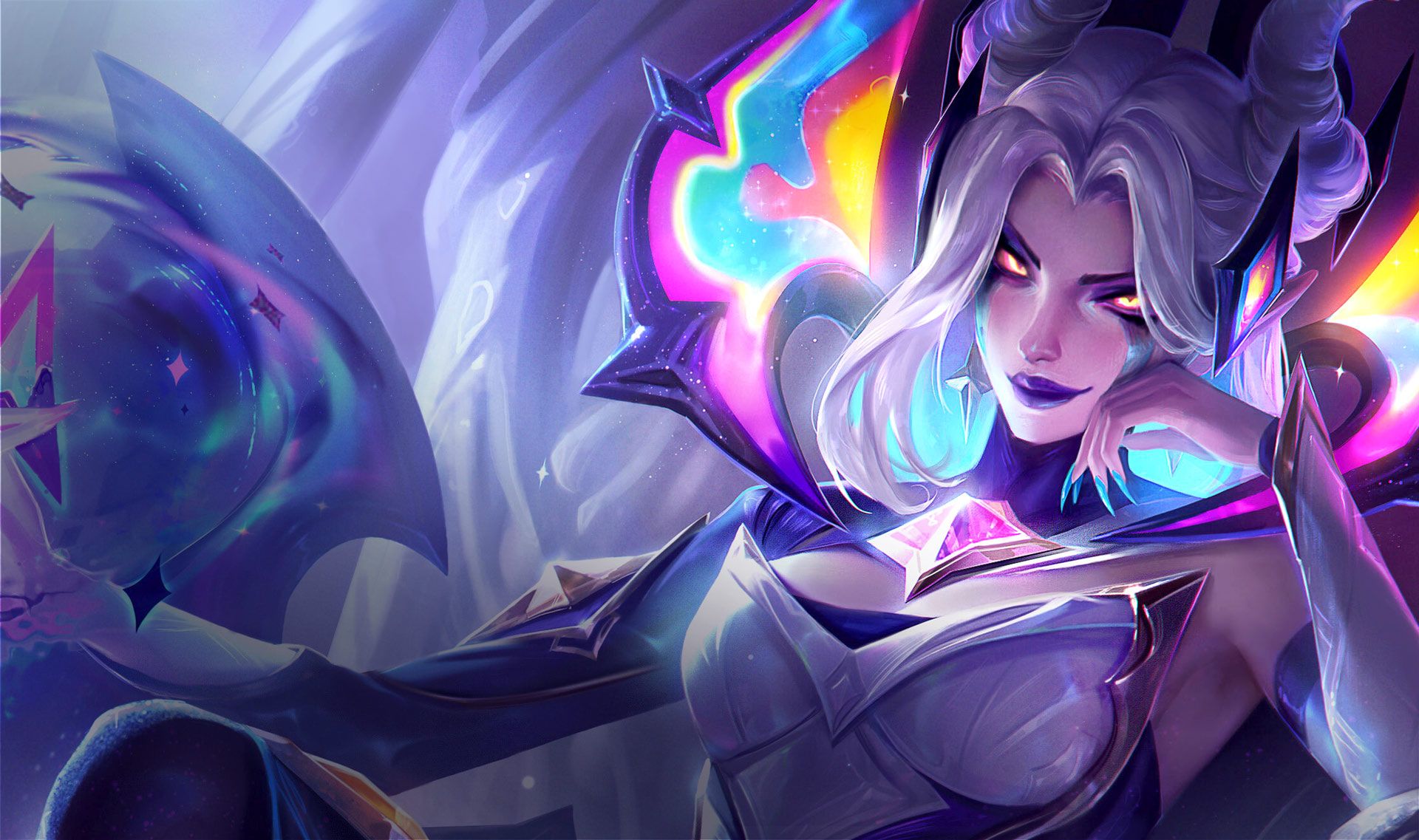
Acting fast, we worked to make as many tanks viable as possible across different comps with our first two patches, with a longer-term solution in store for 17.3 to move Morgana, who was an extra 5-cost for the roster, down in cost to be a more flexible tank. Our move for Morgana was an interesting one. This is just about the only set we could ever pull something like this off due to the stars aligning. Morgana was already a bonus unit amongst the 5-costs, and an AP carry threat that didn’t have a dedicated comp either, so moving her down and reworking her didn’t hurt any comp specifically. But what we found once we did move her down was that she also didn’t really have a comp to go with, making her relatively unexciting compared to a Nunu or Rammus. Overally, we’re happy we tried this, but changing the cost of a champion isn’t a very good solution due to the way it impacts trait webs and comps. For a threat-like unit, it almost worked, but this is about the only rare scenario where we’d try such a thing.
CONDITIONAL COMPS
This is another big one. With set 17 we had more conditional comps than ever before. These are things like Psionic, whose items would dictate what you could play, Stargazer, whose patterns changed which comp you’d be able to run with the trait, Arbiter, whose options limited the splash traits use-cases, and even units like Graves, who’s timing dictated whether or not you could play him successfully.
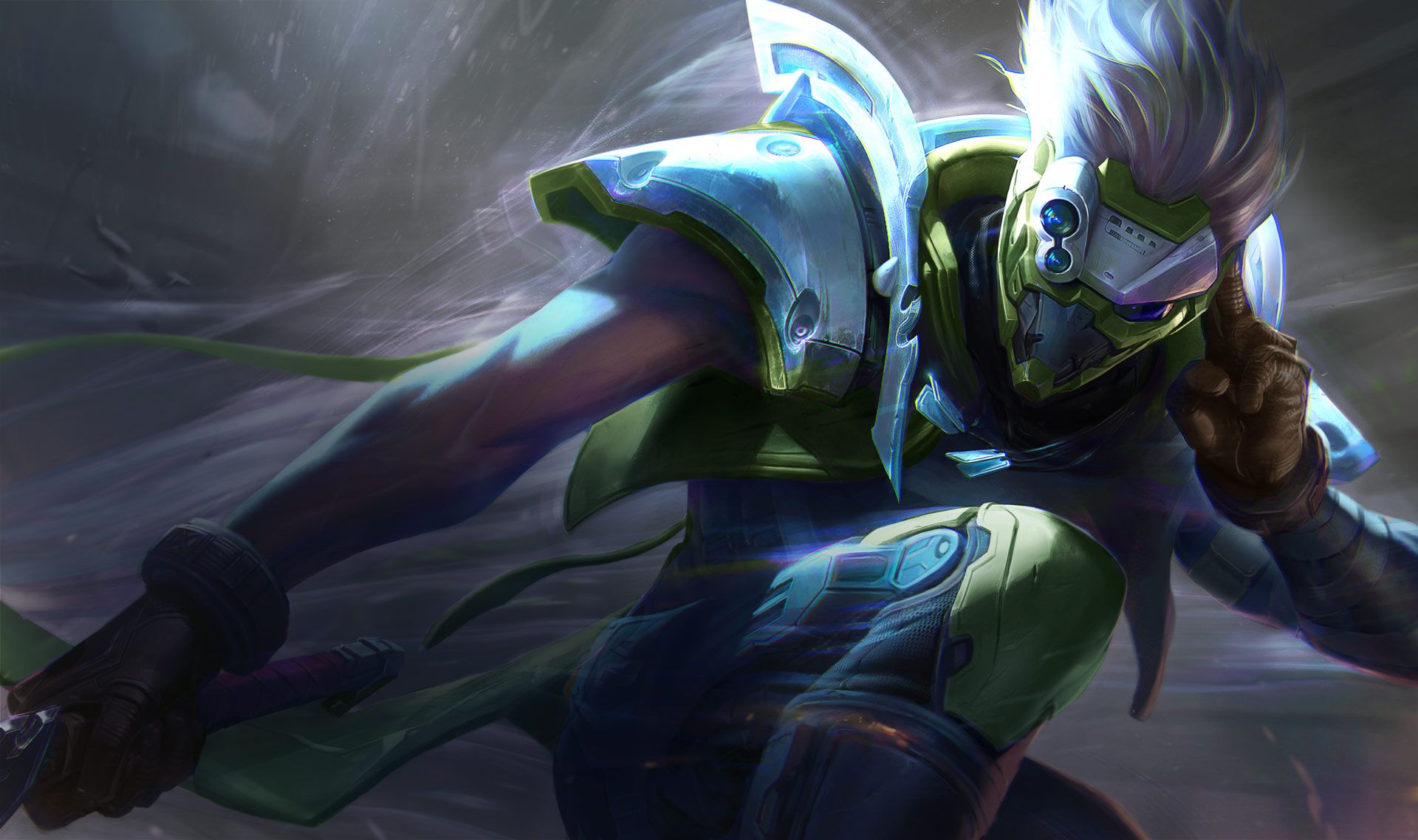
Before we get into the reasons why this didn’t work, it is worth calling out that some conditional elements in a set provide game to game variance that can feel fresh. Graves is the classic example of this with a super cool and exciting build path fantasy that was conditional based upon how early you could access him. But with our standard roster size the conditional elements of many of our traits felt more like closed doors which had the opposite effect on game to game variance, limiting comps you could play, and funneling you down a certain path. All these limited pathways, plus a reliance on just a few solid tanks during our early patches of the set, left many lobbies feeling very same-y.
There are already enough conditional aspects of a game that are core to TFT (Augments, Item Distribution, and even the units you see in a shop), so we need to make sure that conditional traits don’t take up too high of a percentage of our roster. On the live side, we shipped many patches aimed at broadening the conditional elements of our traits to correct this over time, but at the end of the day having a trait close a path for you, especially in a standard sized roster, is rarely a fun experience.
AUGMENTS
For the most part, Augments are something we add near the end of a set’s development, with the intent to have them slot into the set as a reactionary and adaptive piece of content. For Set 17, our Augment design and implementation resources had to be allocated to God Offerings and Boons on our shortened timeline.
We want to take the time to ensure that we’re shipping better set-specific Augments, but not only that, they also need to be released with a set’s launch. Champion Augments and trait-linked Augments are a great way for players to onboard into a set, immediately providing direction and a clear fantasy. So we need to have a solid selection of these available day 1, whereas Space Gods had them added a little later.
While we’re discussing Augments, we do want to pose a question for our most engaged players (that’s you reading this). Our design philosophy around reroll 1 and even 2-costs is that they shouldn’t be powerful enough to take first place without some other major things going right (being healthy enough to still hit level 8/9 or powering up some high-cost secondary carries). When someone selects a Champion Augment, are we okay with that being the needed source of power to achieve that first place (assuming they’re also playing a great game of TFT)? If no, this means that the fantasy of a Champion Augment is getting third/fourth place—which isn’t super fantastic. Anyways, let us know how you feel about the subject across both Silver 1-cost Champion Augments, and Gold 2-cost Champion Augments.
Alright. That’s the end for now. What are you doing down here, didn’t you just read a wall of text? Oh, you're looking for more words from your local TFT team. Well, here they are. We appreciate you—thanks for reading, playing, and be well - look forward to Enchanted Wilds live release just around the corner!