
Dev TFT: Lore & Legends Reviewed
Hey Tacticians, thanks for joining us for our set in review! Woah, woah, woah, I know what you're thinking—weren’t these called Learnings articles? Yeah, well, we’ve been doing these articles for a long time now, and throughout that time, we’ve returned to some of the same issues that have cropped up in the past (e.g. bugs, balance, and even this statement). So, while we are always trying to minimize bugs (they do happen), and make balance as good as possible (game hard), and learn in the process, the fact of the matter is that they will always exist to varying degrees—call them a byproduct of novelty. So, at some point in time, maybe a few sets ago, these became more like Sets in Review articles, where yes, we do talk about our learnings, but we also talk about them in context of the set’s constraints and even its wins.
To timestamp this, it’s late February and we’re just about to launch Patch 16.6 which delivers on a lot of Unlock changes that we hope improve the set’s flexibility and fun! And with that, let’s hear who you’ll be reading from:
Stephen “Riot Mort” Mortimer: Mort is our Game Design Director who moonlights as a Janitor known as Dortmog during some brainstorming sessions.
Tim “Truexy” Jiang: Tim is the lead on our Live Balance Team. He makes me, and you, go eighth, but also first?
Julien Camaraza: Julien is a Game Designer who was the lead on Lore & Legends. He’s been trying to get a Veigar with 1000 AP for weeks and swears he just needs one more game to do it.
Winston Baker: Winston’s our lead Producer on Lore & Legends. His job is to make sure each and every piece of the set landed on time and in a good spot—he’s also a good spot on the bouldering mats.
And with that, let’s drop right in, but first, a TL;DR:
UNLOCKS: Overall, it’s great that we tried different things with Unlocks, especially for the debut of the mechanic. This is the case of an idea we pioneered, with limited negative repercussions (Pioneer taxes as other learning’s articles have called them), and lots of successes. We’re proud of where and how we pushed the system, and even though we haven’t learned conclusively from patch 16.6, we’re eager to keep testing our hypothesis on how to make this system even better!
100 CHAMPIONS: More variety is more good and 100 Champions allows us to go there, but it’s a ton of work and takes a lot of foresight to pull off.
FLEXIBILITY: With a super flexible trait web and many Threat-like units, Lore & Legends was pretty flexible, but we believe Unlocks limited this to an extent, and have shipped dramatic changes with patch 16.6 to make the set even more flexible.
SHARP AND MEANINGFUL DESIGN: REFLECTIONS ON ARTIFACTS: We went from sharp and specific Artifacts in K.O. Coliseum that we had to balance champions around, to safer, less specific Artifacts that are less powerful on one champion and more powerful on a mix, but at what cost?
SUPPORT CHAMPIONS: With a roster of 100 champions, we were able to include quite a few Support style champs, but we wish we had leaned even more into Support this set, especially with our extended roster.
LORE AND THE LOREFINDER: Lore was the backbone to our set mechanic, our traits, and the all-new Lorefinder.
UNLOCKS
As a mechanic, Unlocks originated with the goal of diversifying end-game screens and mid-game boards alike by allowing a way to almost double our roster. And while we would find flaws with the distribution of our Unlockables—that’s what patch 16.6 is about—the impact of Unlocks to champion pools/bags felt largely intuitive with unwanted Champions quickly leaving your pool, leaving only the sought after behind.
We tested many ways to distribute Unlocks and provide access to our 100 Champions from super-strict, quest-style Unlocks such as Shurima, to the almost accidental unlocks of Poppy.
This was good for future experiments, as we learned which ones worked and which ones did not, and were able to make adjustments to the system to consistently improve upon them. Ultimately, what we learned from the system is that easier Unlocks meant more flexibility and higher skill expression. We’ll talk more about this explicitly in context to the soon to be released patch 16.6 in the next section, but for now, let’s get into what makes a good/bad Unlock.
Upon release, we wanted all our Unlocks to pay homage to the champion’s Lore… I mean the set is called Lore & Legends. This was great from a flavor perspective and added a lot of character to the set as the Lore set—which was further boosted by the Lorefinder, but ultimately it got in the way of applying our system learnings as the set went on. And just what were those learnings? Let’s break them down here:
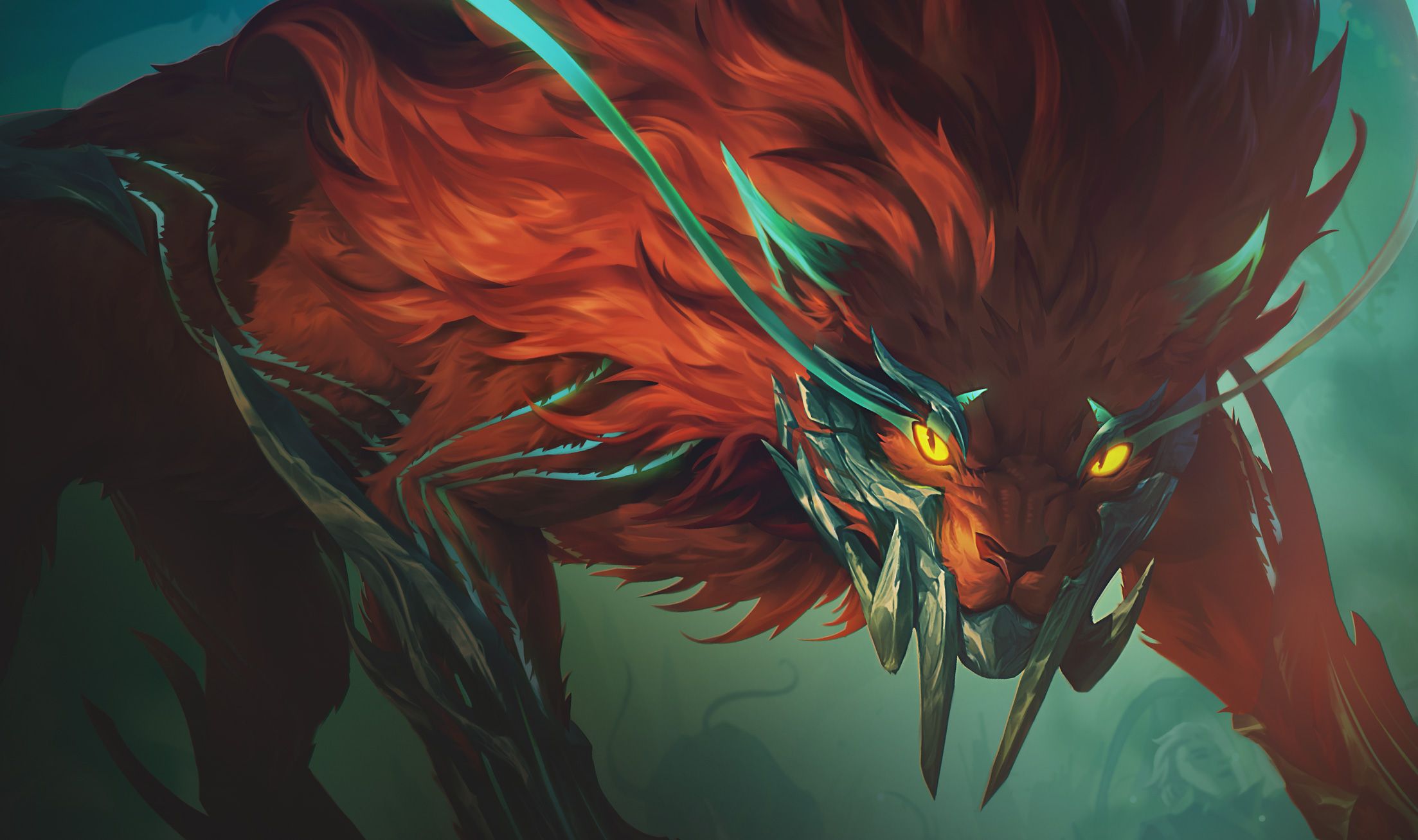
Expanded-Choice/Flex Champions: Champions that provide utility that all players may want on late-game boards should be considered bonus champions in the larger pool. These are champions like Skarner, who brings a Teamwide Armor buff, or Sett, who has two-health bars and is great at killing tanks. Unlocking these champions shouldn’t be possible by accident due to their value, but it also shouldn’t be too difficult. Since these champions are Unlockable and opt-in, we could have experimented with leaning even further into the way they impact comp-building. Would a Skarner with a much bigger Armor aura entice you to Unlock him in lobbies that are heavily skewed to AD? Where we hit very well, and hopefully improved upon in 16.6, is Bard as a flexible reroll focused resource generator. Seeing him opted into across a variety of reroll boards was a treat, and his Caretaker trait played and felt good.
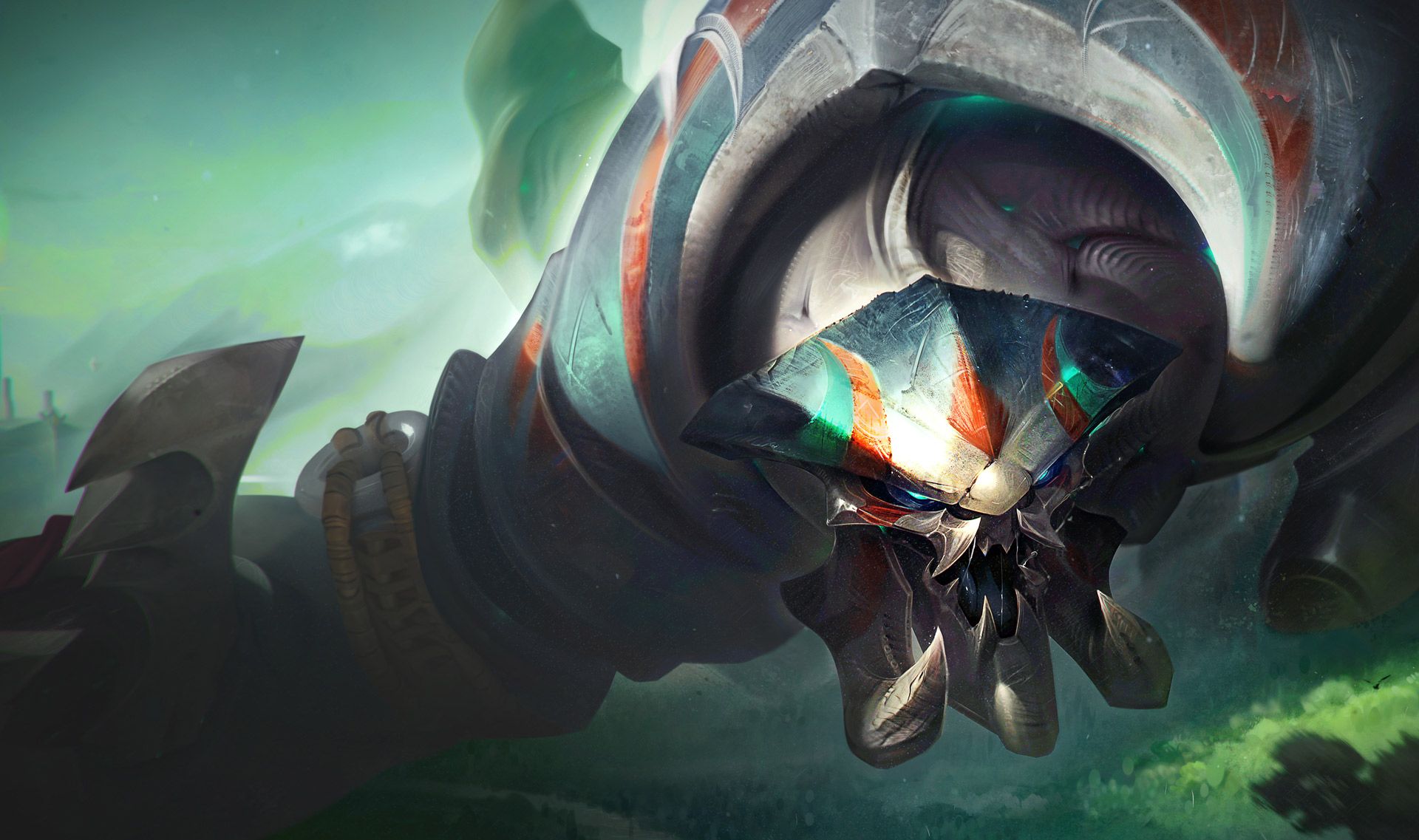
Quest Champion Unlocks: Some, but not many, Unlocks should be exceedingly difficult to get. These are our Quest Unlocks. Our successful iterations of this was with Shurima and Baron Nashor, whose power scaled exceptionally well with their difficulty to Unlock. Shurima as a chase trait and chase Unlock was an exceptionally risky trial for the debut of our Unlock system, and we could only have experimented with this trait when we had such an extensive roster—I mean could you imagine a Shurima style trait in a roster with 35 fewer champs? With a bit of tinkering in PBE we were able to land Shurima without any additional changes to the way you Unlocked these powerful Ascended, creating a new high-risk high-reward experience. Where we fell short with these was Sylas, who we consistently struggled with in terms of power to unlock difficulty. But while we had issues with Sylas, he taught us a ton about how Unlocks played out across different skill brackets. In our high to elite skill brackets, players could consistently Unlock Sylas every game if they wanted to, creating a situation where when Sylas was desired (read: strong), high-skill players could consistently add him to their boards. Another example of this was Aurelion Sol, who had to be balanced around high-rolling him at Stage 3-5, where a Challenger player could see the opportunity to pull this off. This made him far weaker to play in lower to even high ranks’ players, but unfortunately when we tuned Aurelion Sol to be strong when the majority of players would be able to hit him, he was far too powerful at our elite ranks.

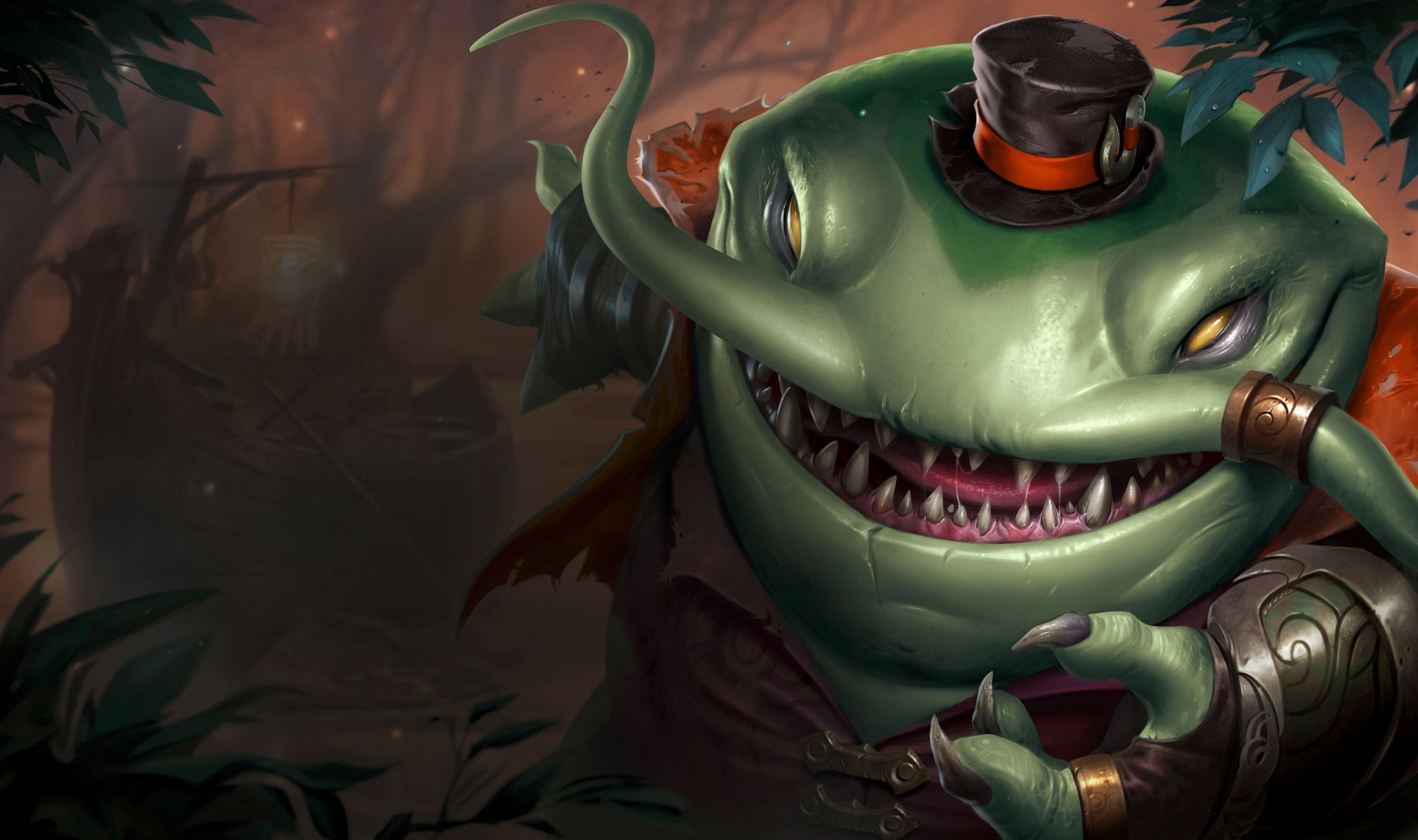
Capstone Unlocks: One of the biggest wins for the Unlock system was the ability to take our Capstone units (high-cost Origin specific units) and make them feel really special, by all but guaranteeing them once a player went down their Origin trait enough. Creatively, this allowed us to make these Capstone champions play out as a piece of their trait, while also paying homage to the lore of their Origin. But, even further than that, Capstone champions as Unlocks removed them from the shared pool. Seeing a 5-cost that was intended for a specific Origin you weren’t running often felt disappointing, especially so when it was the first 5-cost you saw at Level 7. Moving these Origin-specific Legendaries into the Unlock system made shops feel more consistent for players, while also making the process of playing that Origin feel more rewarding. All this was best highlighted by Champions like Galio and Tahm Kench, who while we would make it easier to Unlock with 16.6, highlighted the benefits of being a Capstone Unlock. One minor caveat, that we are fixing for 16.6, is that these Capstones are currently locked behind playing the entire vertical, and not a more flexible larger piece of the vertical (e.g. Demacia or Bilgewater (5)) with other splashable variations. In summary, Capstone Unlocks are great, but they’re even better when you have a bit more freedom to build around them.
Comp-enabling Unlocks: These are the Yasuo Yone, Ashe Tryndamere, or Neeko Nidalee comps. When tying a low-cost champion reroll into a high-cost champion, we had to make sure which roles they played: who was the carry, and who was the tank. Asking the player to get excited about a second carry after going all in on a first one is both tough for players’ item economy, but also not super intuitive. This was most clear for Yasuo Yone, where before 16.6, players had to commit extensive resources to three-star Yasuo, and then, depending on their items, pivot to Yone as the primary carry. Where we found success here was with Neeko and Nidalee, where Neeko became the comps clear tank, while Nidalee was the carry. Nidalee and Neeko were also much healthier pre 16.6 than Yasuo and Yone because you were only required to hit 6 copies of Neeko rather than 9 of Yasuo. Unfortunately with her flexible traits, this could be harder due to her likelihood of being contested.
Overall, it’s great that we tried different things with Unlocks, especially for their debut. This is the case of an idea that we pioneered, with limited negative repercussions (Pioneer taxes as other learnings articles have called them), and lots of successes. We’re proud of where and how we pushed the system, and even though we haven’t learned conclusively from patch 16.6 we’re eager to keep testing our hypothesis on how to make this system even better! When we come back to Unlocks, which won’t be for a bit, we will have tons of data and learnings to ensure we have a strong Unlock roster on release.
100 CHAMPIONS
You can’t really talk about the Unlock system without talking about our expanded roster, which ended up being a clear win—but it didn’t start out that way. Early on in player labs and during our early reveals of the set, we were met with quite a few concerns about set complexity (which is understandable as there were 100 champions to master and figure out how to Unlock). Luckily for us, and our audience, the perceived complexity of such a large roster was not a detractor, likely due to it not having a huge effect on the number of unique Champions you fielded throughout a game—you just never had the full roster available to you in a single game. Or, it could be due to the complexity being offset by the fun of being able to play more of our iconic champions than ever before. Regardless of the reason, we quickly saw concerns dissipate around complexity as soon as players got a few games in. And all that further supports one of TFT’s golden rules: More variety is more good, or how I like to say m.v.i.m.g.—it just rolls off the tongue.
Most of the time when we look at TFT, the more variety on an axis you understand (in this case Champions) is awesome—to an upper limit of course. Whether that’s more unique Augments, more exciting Anomalies, or more powerful cashouts for our high-stakes trait. And the kicker for this is that there are very few drawbacks as long as the choices are simple and the options aren’t excessive. So, now’s when you ask, “Well, why not add more champions to every set?” To which we reply: We’d love to, BUT there are so many limitations here from art to design, to skins, to sound effects, to QA, to engineering and beyond. And all that takes a ton of time. Time that we had budgeted out for Lore & Legends, but when we explore Unlocks again for another set, we need to have a lot more runway to do so. For our next two sets, instead of spending that long runtime on additional Unlock champions, we’ve got new and returning systems to explore. So don’t expect Unlocks to return for the next two sets. One other thing that’s hard with an expanded roster, is that unless the thematic is Runeterra, it’s really hard to find thematically resonant skins for that many champions. Good thing our friends on League are continually working to fix that issue for us, but we definitely need to budget time and resources to add a few TFT original skins to flush our roster out if we choose to utilize a non-Runeterra theme.
The last issue with making 100 champions is making each one feel unique. Picking the extra champions to expand a roster is the easy part, but making sure they don’t step on each other in design too much is vital. Take our basic Attack focused carries of Lore & Legends: Jinx, Draven, Yunara, Kindred, Kai’Sa, Vayne, and Aphelios. We typically don’t have that many auto-attack focused Marksmen, so adding appropriate hooks, like Jinx going berserk with Rockets, or Vayne kiting around the map, to make each feel unique becomes a substantial design burden.
We can choose 100 champions, that’s the easy part, but building them with time and care—that’s something that takes a village of foresight.
FLEXIBILITY
In our last set learnings’ article we spent a lot of time talking about how. K.O. Coliseum was not as flexible of a set as we would like, so how’d Lore & Legends do on this front. Pretty good, and hopefully even better come patch 16.6. So, let’s get into how we got to pretty good and our hypothesis for getting to even better.
The trait web for Lore & Legends was built to be flexible, with low breakpoints that were strong and splashable for the majority of our Class traits (Bruiser, Defender, Slayer, etc) and even some of our Origins (Piltover, Void). We even had a return of Threats (traitless but powerful units) in the form of Targon with strong (with a few patches) utility-driven units like Leona, Zoe and Taric, each with their own role at various stages of the game. Past Targon, we had a ton of Threat-like 5-costs from Lucian & Senna to the Artifact Printer Ornn. These were champions that could fit into almost any board if the situation, and the rolls, called for it. These are learnings that have already been applied to our next set’s roster, which returns to a standard size.
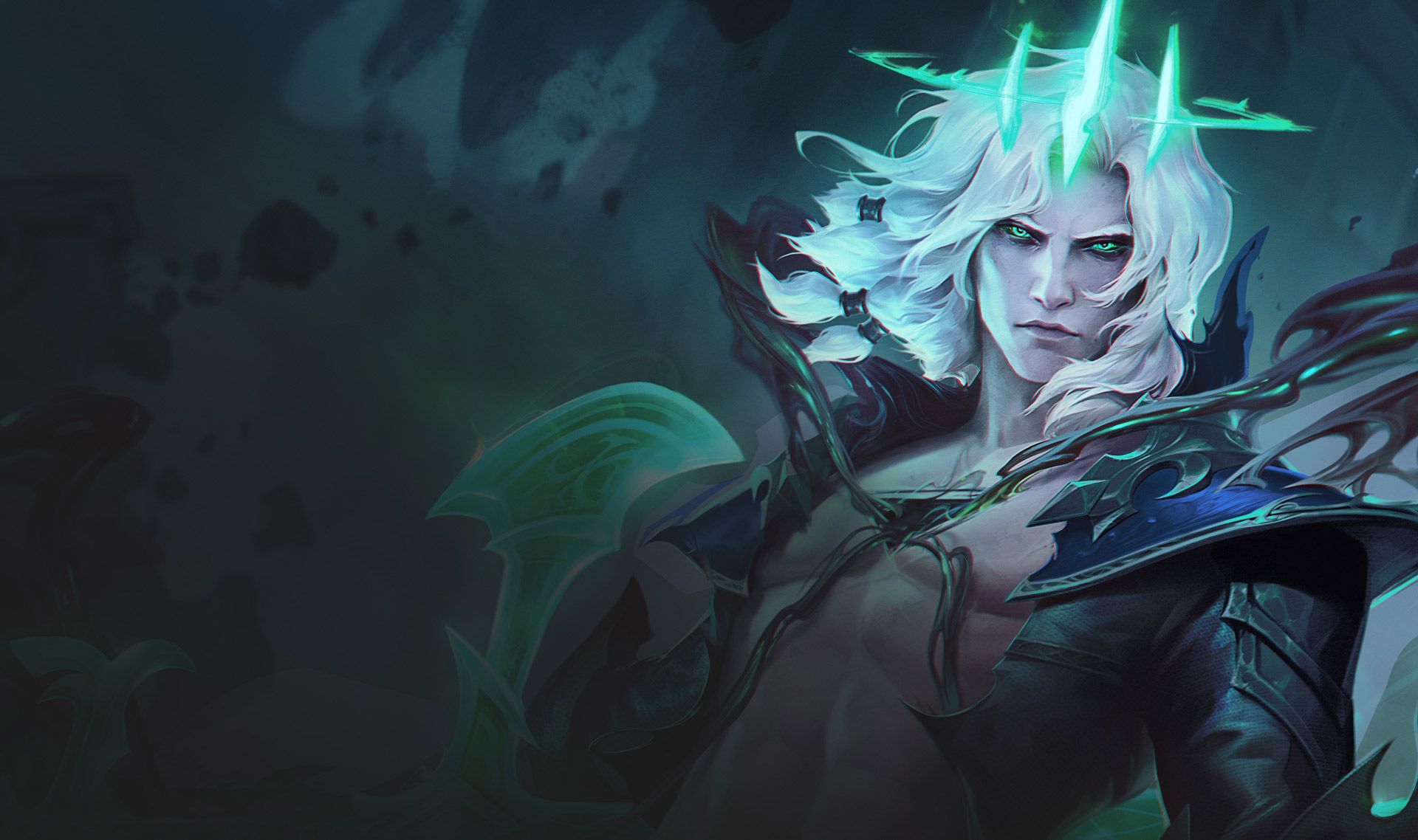
Where Lore & Legends wasn’t flexible enough, was in the Unlock mechanic. Pre 16.6, many of our powerful Unlocks prevented flex play, by having you commit to things like Void, Shadow Isles, Bilgewater, Yordle, Ionia (Prosperity) as soon as you could possibly do so. While there’s something to be said about the availability of an on-the-rails experience, where you’re locked in by 2-1 and know each unit you are going to play every step of the way, we had too many of these comps, that limited flex play. And when we look at flexibility in the future, we want to make sure that our high-skill players are tempted to pivot when something enticing appears, even as late as Stage four. You shouldn’t feel locked in, instead you should lock-in figuratively speaking by constantly accessing how and what you can do to upgrade your team.
To address the flip-side of this complaint, with a set with 100 Champions, it may be okay to be on the rails and locked in at 2-1 for a small number of comps. If we only had one or two of traits that did so, that would have been fine, in fact maybe it’s a good thing, especially early in a set. But, we had a few too many, and these were made all the more restrictive when Unlocks further forced you to stick with a comp, just to get its 4 or 5-cost unit. We’ll see how 16.6 changes this, with its goal of enabling 4 and 5-cost lines that require less commitment from traits, but for now, let’s move to the next section!
SHARP AND MEANINGFUL DESIGN: REFLECTIONS ON ARTIFACTS
This topic’s title may look familiar, that’s because it’s been ripped word-from-word from our last Learnings article, and it’s here now to revisit how Artifacts turned out. But first, a recap. In K.O. Coliseum, Artifacts were meant to be sharper, more champion-focused, but that often resulted in the champion or the Artifact being balanced entirely around being used together, effectively removing units like Ahri, who needed Luden’s Tempest to perform well, from the set.
For Lore & Legends, we used a new framework for Artifacts, designing them to make sure their power ceilings and floors were closer together, making them more consistent, but without the peaks of say, Into the Arcane’s Artifact-blender Nocturne. We also set out to keep their power level between Core Items and Radiant Items. And we kinda did that, but the unintended results were that Artifacts felt a little bit flat and uninteresting. Now this is certainly an improvement to their divisiveness and power of the past, as far too many sets in a row have been determined by niche Artifact synergies. Now that we’ve seen what it is like to have Artifacts a bit more bland, but more consistent and balanced, do we miss the sharpness of the past?
Hmm, probably not for now, but there’s always room for improvement, so as with everything else in this article, continue telling us what you think, and what TFT you want to play!
SUPPORT CHAMPIONS
Support champions, champions you typically do not itemize that provide utility to your other units, aren’t able to consistently be included in every set. In large part this is due to wanting each champion to have a power fantasy that’s enabled by our item and Augment systems, but with a roster of 100 champions we were able to include quite a few Support style champions: Kobuko & Yuumi/Lulu and even some that did have itemizable power fantasies like Sona/Orianna.
Overall though, we got caught in our old ways, slowly lowering the supportive nature of our powerful Support champions with nerfs to Sona focused on her healing, and Orianna, focused on her shielding. And then there’s also the fact that we never really let Lulu become a champion worthy of even being an item holder. While this may have been appropriate in a traditional roster, we wish we had leaned even more into Support champions this set, especially with our extended roster. While there’s always a trade-off with Support champions being non-intuitive (it’s tough for new players to realize they typically shouldn’t itemize them), we missed an opportunity to make our dynamic 100 champion roster, even more varied.
LORE AND THE LOREFINDER
Lore was the backbone to our set mechanic, our traits, and the all-new Lorefinder. So how did that land? Well, we already discussed the complications it created for our set mechanic, but how about the impact of the Lorefinder? The Lorefinder was the first time players could pursue progression in TFT’s core game experience (not Modes) that was not tied to Rank or the Pass, and it was a hit! Rather than asking players to get all sweaty and tryhard, the Lorefinder offered rewards to players who instead want to explore the breadth of a set and discover all that’s possible across 100 champions and a complex web of traits. That’s the promise of the Lorefinder.
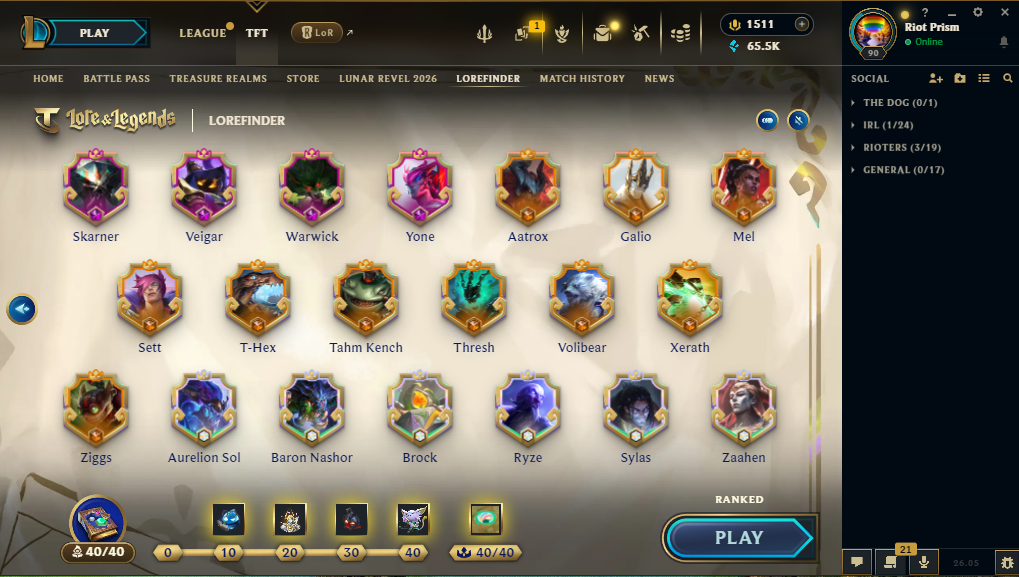
And we’re happy to say, Lorefinder was a promising new step as we explore more ways to reward players for how THEY like to play TFT, even outside of Rank/Pass. In fact, we’re already in the works on a follow-up experience for our next set, to see if it fulfills similar motivations even without the Unlock component.
Beyond Lorefinder, many players loved the careful lore homages that we injected into the set. Whether it was unlocking Mel by seeing a two-star Ambessa die, or over 500 voice lines that would play highlighting interactions between our champions and further coloring their backstory. We brought the Lore, and you, dear reader, brought the Legend. Alright—someone please take away my keyboard.
And that’s about it! A shorter one compared to Learnings articles of the past, but that doesn’t mean there wasn’t a ton to be gained from Lore & Legends. As always, a big thanks for reading these and playing our game. See ya in the stars, superstar!